THE STORY
In 2018, Justin Rosenberg made an announcement that rattled the fast-casual world.
Honeygrow — the Philadelphia-born stir-fry and salad concept he’d spent six years building into a nationally recognized brand — was closing eight locations. The company was pulling out of Chicago entirely. It was halting all expansion. And it was publicly admitting that the path it had been on was the wrong one.
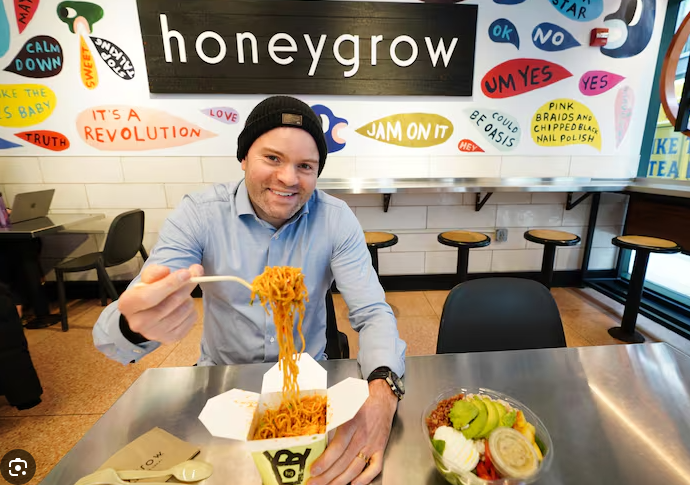
At the time, Honeygrow had raised $70 million. It had been named one of the hottest emerging concepts in the country. Rosenberg himself had been featured on industry power lists. Investors believed in the brand. Consumers loved the food.
And yet, eight stores were closing.
“What I did wrong, as a young, brash entrepreneur, was instead of doing one, let’s do six.” — Justin Rosenberg, Honeygrow CEO
What happened to Honeygrow isn’t a cautionary tale about bad food or a flawed concept. It’s something more instructive than that. It’s a story about what happens when growth outpaces the operational foundation beneath it.
And it’s a story worth understanding in detail, because right now, somewhere in the emerging restaurant space, a brand is making the same exact mistakes.
THE ORIGIN
What Honeygrow Was — and Why Everyone Believed in It
Justin Rosenberg founded Honeygrow in 2012 in Philadelphia. The concept was smart: a fast-casual brand built around made-to-order stir-fry, noodle bowls, and salads. Fresh, customizable, and tech-forward before that was a cliché. Customers ordered at kiosks before most restaurants had figured out how to make tablets work.
The food was genuinely good. The brand voice was clean. The unit economics in early markets looked strong. Everything pointed toward a concept that had legs.
The fast-casual segment was exploding. Sweetgreen and others were proving that health-forward food could scale. Investors were looking for the next one. Honeygrow looked like a strong candidate.
And so the money came in.
THE FUNDING
$70 Million and the Problem With Unlimited Ammunition
Between 2015 and 2017, Honeygrow raised $70 million across three rounds, mostly through Miller Investment Management.
$25M — June 2015
$20M — November 2016
$18M — December 2017
That’s a lot of runway. And with runway comes pressure — pressure to deploy capital, pressure to justify valuation, pressure to grow. Private equity doesn’t fund brands to stay small.
Here’s the thing about outside money that most operators don’t say out loud: it doesn’t validate your systems. It just accelerates whatever you already have. If your foundation is solid, it accelerates success. If your foundation has cracks, it accelerates the day those cracks become craters.
PE money doesn’t validate your systems. It just makes you move faster, in whatever direction you were already heading.
Honeygrow had a compelling concept and a strong early track record. But a compelling concept is not the same as a scalable operational system. And that distinction matters more than almost anything else at scale.
THE EXPANSION
Seven Markets in One Year
With capital secured and investor confidence high, Honeygrow did what a lot of emerging brands do when the money arrives: they opened everywhere, fast.
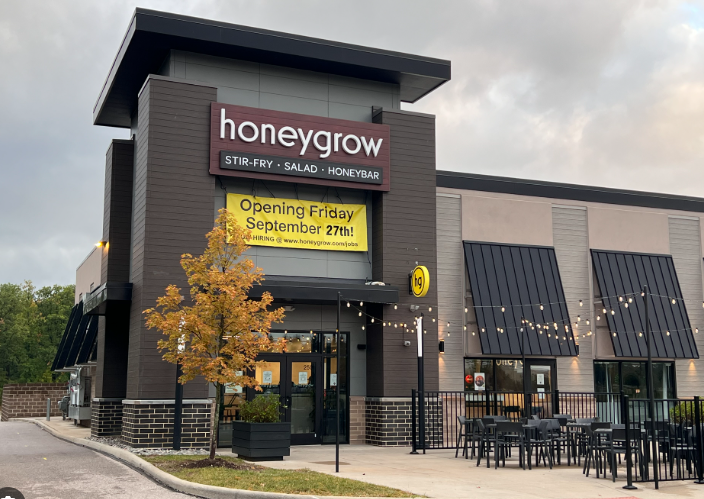
The company expanded into Boston, Chicago, New York, and Washington D.C. — major urban markets with expensive real estate, high labor costs, and unforgiving customer expectations. Simultaneously, they launched a second concept called Minigrow — a smaller-format version of the brand designed for high-traffic urban locations.
And at the same time they were opening in seven markets and building a new concept, they also brought in a new executive team.
Read that again: new markets, new concept, new leadership team, all at once.
Launching seven markets, a second concept, and a new executive team simultaneously isn’t a growth strategy. It’s a recipe for operational chaos.
In any one of those moves, there’s significant risk. You’re asking an organization to absorb change, maintain culture, and execute at a high level while the ground is shifting under it. But all three at once? That’s not bold. That’s overconfident.
The operational infrastructure that worked in Philadelphia, the training systems, the culture, the manager pipeline, was never designed to run at that scale. It hadn’t been built to. And when you open that many locations that fast, what you’re really doing is finding out where your systems break. The hard way.
THE BREAKDOWN
What Actually Broke — and Why It Was Predictable
Let’s be specific, because the details matter.
Ticket times at Honeygrow locations were running 11 to 12 minutes. In fast casual, that’s a problem. When customers wait that long, they leave. Or they don’t come back. Either way, your sales numbers don’t reflect your concept’s potential, they reflect your operational reality.
Third-party delivery had become a significant line item. In 2018 alone, delivery fees cost Honeygrow $700,000. That’s not a marketing expense. That’s a systems problem, what happens when you’re growing a channel faster than your ability to manage its economics.
Real estate decisions in the new markets weren’t grounded in the right fundamentals. High-traffic urban locations looked attractive on paper, but the lease economics required volume that many of the stores never achieved.
And culturally, Rosenberg later acknowledged something that most founders struggle to say: “We made a lot of hires where people weren’t necessarily willing to put in the work.” The team that was being built didn’t carry the same passion that had driven the early stores. And passion, in a restaurant brand, isn’t a soft concept. It shows up in ticket times, in food quality consistency, in how a manager runs a shift, in whether the team actually trains.
All of these things, ticket times, delivery economics, real estate, culture, hiring, are symptoms of the same underlying problem: the operational foundation hadn’t been built to handle what was being put on top of it.
The food didn’t fail. The concept didn’t fail. The operating system failed — because nobody had built one that could scale.
2018
Eight Closures and the Weight of Admission
In 2018, Honeygrow made the hard call.
They closed four Honeygrow locations and all four Minigrow locations. They exited the Chicago market entirely. They pulled back from expansion plans for 2019. And Rosenberg went public with what had happened, not with spin, not with corporate framing, but with a level of honesty that the industry doesn’t often see.
“Closing restaurants sucks. Everyone’s questioning the business, they’re questioning me as a leader.” That’s not a press release. That’s someone who built something they loved, watched it get tested by reality, and had to make decisions that most founders dread.
But here’s what made the difference: Rosenberg didn’t rationalize. He didn’t blame the markets, the economy, the competition, or bad luck. He looked at what Honeygrow had done and called it what it was. Too fast. Too many places at once. Systems that weren’t ready.
That kind of honesty is rare. And it turned out to be the prerequisite for everything that came next.
THE RESET
What Rosenberg Did — and Why It Worked
The reset wasn’t glamorous. It didn’t involve a rebrand or a pivot to a hot new menu trend. It was operational work, done with discipline.
First, they exited the leases they couldn’t make work. No amount of operational improvement saves a location with fundamentally wrong economics. Getting out of bad real estate, even when it’s painful and expensive, was table stakes for the turnaround.
Second, they renegotiated third-party delivery fees. That $700,000 annual cost became a target. By the time the reset was done, the delivery economics looked materially different.
Third, they went back to the training. Ticket times of 11 to 12 minutes became a specific, measurable problem with a specific, measurable fix. Through revised training protocols and what Rosenberg described as “friendly competition among staff,” they cut average ticket times to 6 minutes and 30 seconds. That’s not incremental. That’s a fundamental shift in how the brand operated at the guest level.
Fourth, and maybe most importantly, they rebuilt the team. Rosenberg went back to the original culture, the passion that had driven the early stores, and made sure the people around him carried it. “Elite general manager” roles were created to give high-performing operators a real career path and real earning potential. The bench got rebuilt deliberately.
They also made a strategic choice that doesn’t get enough credit: they stopped chasing expensive urban markets and shifted focus to suburban locations. Places like Christiana, Delaware. Rockville, Maryland. Pittsburgh. Markets where the rent economics, the customer base, and the operational environment were actually aligned with what Honeygrow needed to be profitable.
They didn’t pivot the concept. They fixed the foundation. That’s the whole story.
THE RESULTS
What Happened When the Foundation Was Fixed
By July 2019, less than a year after the closures, Honeygrow reached EBITDA positivity. Same-store net operating income was up 55 percent.
By 2021, Honeygrow had its most profitable year in company history. Sales were up 50 percent versus 2020 and 27 percent above pre-pandemic 2019 levels. This was not pandemic-era asterisk performance. This was a brand that had actually fixed something.
And here’s the detail that says everything: they funded that growth themselves. No outside investors. No new equity rounds. The business was generating enough to expand on its own terms.
55% — same-store NOI increase by mid-2019
+27% — 2021 sales vs. pre-pandemic 2019
30% — profit increase in 2023 vs. prior year
76 — locations operating in 2026, with more under development
By 2023, Honeygrow posted record profitability, up 30 percent from 2022. By 2026, the brand was operating 76 locations across the eastern U.S. with dozens more in development.
The brand that had to close eight stores to survive is now one of the strongest growth stories in fast casual. Not because anything changed about the food or the concept. Because the operational foundation got built.
THE LESSONS
What This Means for Your Brand
We’re not telling the Honeygrow story to point fingers. Justin Rosenberg built something real, had the courage to be honest when it broke, and did the hard work to fix it. That’s not failure, that’s one of the harder paths to success.
We’re telling it because we see the setup to this story play out constantly in the emerging restaurant space. And we want to give you the ability to catch it before it costs you eight stores.
Here are the specific lessons we draw from Honeygrow, and how they connect to the work we do at We Know How.
1. PE money doesn’t validate your systems — it accelerates them. When capital arrives, the instinct is to move. But growth without an operational foundation doesn’t build a brand, it exposes its weaknesses at scale. Before you accept outside investment, or before you use it to open your next three locations, ask yourself: does the system that runs my best store today actually work if I have to replicate it six times? If the answer is anything less than a confident yes, the next dollar spent on opening stores is funding a future problem.
2. You cannot build a second concept while your first one is still developing. Minigrow was a concept born from ambition, not operational readiness. The bandwidth required to develop a new format, new training, new staffing model, new economics — is enormous. And it competes directly with the bandwidth required to stabilize your existing stores. If your core brand isn’t humming, a second concept is a distraction dressed up as a growth strategy.
3. Real estate is an operational decision, not a marketing one. Honeygrow chose high-profile urban markets because they signaled relevance. The problem is that relevance doesn’t pay rent. The brands that survive long-term pick locations where the unit economics actually work, where traffic, lease cost, and operational capacity align.
4. Bench strength predicts performance before the P&L shows it. The cultural issues Rosenberg described, hires who weren’t willing to put in the work, a team that had lost the original passion — showed up in ticket times, in sales, and in closures. But they existed long before the numbers reflected them. A staffing and leadership assessment done on those stores in 2016 or 2017 would have flagged what the 2018 P&L confirmed. This is what the Bench Strength Index measures. It’s not theory, it’s the gap between what your stores look like on paper and what they’re actually capable of executing.
5. The comeback is always operational. There was no marketing campaign that turned Honeygrow around. No viral moment. No rebranding. The turnaround was: fix the training, fix the ticket times, fix the leases, fix the culture, fix the delivery economics. Every element of the recovery was operational. This is always true. Marketing can accelerate a healthy brand. It cannot save a broken one.
6. Closing locations to get healthy is sometimes the right call — but it shouldn’t be the only option. Honeygrow needed to close stores to survive. That’s the hard truth. But the harder truth is that with earlier intervention — a real operational assessment, honest conversation about bench strength and unit economics before the expansion, systems that were designed to scale, some of those closures might have been avoided entirely. The time to build the foundation is before the cracks show. Not after.
Honeygrow is 76 locations strong today because one founder was willing to stop, look honestly at what broke, and fix it from the foundation up.
That’s the whole story. And it maps perfectly onto what we say every time someone asks us what We Know How actually does.
“Growth isn’t about getting bigger. It’s about getting better.”
If your brand is growing and you’re not sure your foundation can hold it, or if you’ve already felt the weight of scaling faster than your systems, that’s where we start. Not with a deck. Not with a framework. With an honest conversation about what’s actually going on inside your operations.
That’s the conversation Rosenberg eventually had to have with himself. We’d rather help you have it before the closures force it.
Want to know where your operational foundation stands?
Start with The Multi Unit Readiness Self Assessment, the same 4-input framework we use with every operator we work alongside. Download theself assessment and other tools at weknowhow.pro or reach us directly at 224-433-0629.
No responses yet